ICCJ 2026 Conference in Hanover / Germany
"Repentance, Repair, and Reconciliation: Religious Resources for Tumultuous Times"
12/07/2026 | Na stronie od 10/12/2025
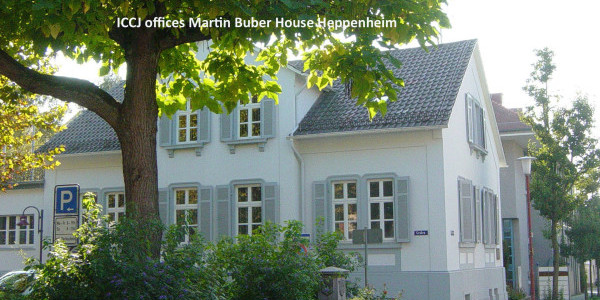
Source: ICCJ
Conference Theme
When relationships are strained, rebuilding them can be challenging. Over the last few generations, through dialogue, many Jews, Christians, and Muslims have overcome difficult histories, though there have been crises and controversies along the way. Each tradition has its own vocabulary and unique approaches to the concepts of repentance, repair and reconciliation; all, however, are based on affirming the dignity of every human being. How do we prioritize the inclusive and universal aspects of our traditions over any tribalism or bias against others? One aspect of the conference will focus on these teachings.
A second dimension of the conference will be more practically oriented. Interreligious dialogue both benefited from and contributed to the deepening appreciation of the significance of repentance and repair in our shared societies. Repentance and repair have found expression in societal and political endeavors beyond the interreligious arena. For example, in Germany, the handling of the past has shaped several generations. In the United States and Australia dealing with the treatment of indigenous peoples and the descendants of the enslaved hass been controversial. Other examples may emerge from our member organizations. But the continuing conflict between Israel and its neighbors will be on all our minds: are there ways, given our different contexts, that we can promote repentance and repair in this region so central to our religious and individual self-understanding as Jews, Christians and Muslims? How can we promote repentance and repair in a time of conflict and war in our own communities and globally?
Final Version – December 8, 2025 1
At the 2026 annual conference of the ICCJ in Hanover we look forward to dialogue about religious resources for and various concepts of repentance, repair, and reconciliation in Jewish, Christian, and Muslim traditions.
During its three and a half days, the event will offer keynote lectures and plenary sessions on the theme as well as more than 20 interactive workshops, site visits, and excursions.
The ICCJ Executive Board, the ICCJ General Secretary and the collaboration partners together with the members of the planning committee look forward to welcoming you to Hanover, Germany!
A PDF-file with an introduction to the conference theme for HANOVER 2026 can be found here. Please share it with colleagues and friends!
Further information will follow on ICCJ's website in due time. To receive new information and updates promptly by e-mail, please register for the
ICCJ-newsletter. The online-registration for participants in ICCJ's 2026 conference will open at the end of February 2026.
Call for Workshop Proposals: ICCJ Conference 2026
The ICCJ invites proposals for workshops for its 2026 international conference to be held in Hanover/Germany, July 12-15 on the topic "Repentance, Repair, and Reconciliation: Religious Resources for Tumultuous Times"

Call for Workshop Proposals
In addition to plenary sessions, keynote papers, and visits to local sites, the ICCJ also puts a great emphasis on the interactive workshops that occur during its annual conferences.
The ICCJ invites proposals for workshops touching on the topics of and issues related to the annual conference theme (see here). Additionally, proposals for workshops on the current state of Jewish-Christian and Jewish-Christian-Muslim dialogue on the international or local scenes are also invited.
Proposals containing
- the workshop title and an abstract of no more than 300 words,
- the name(s) of the workshop presenter(s) + short biographical blurb(s), and
- a description of the methodology and pedagogical format of the workshop of no more than 100 words
are due by January 20, 2026 and are to be sent to the ICCJ headquarters (events@iccj.org). Applicants will be notified of the status of their proposals by February 13, 2026.
Guidelines for preparing workshop proposals:
- Workshops are expected to be interactive, involving the participants as much as possible. They are not meant to be lectures or academic papers delivered to passive audiences. They can be panel presentations, in which case having Jews and Christians (and Muslims) as discussants is preferred.
- Workshops will be in English.
- Workshop presenters are expected to respect the given time frame (90 minutes).
- If relevant and/or possible, workshop presenters are encouraged to provide handouts to participants.
- All workshop presenters are expected to cover their travel and housing and to pay conference registration fee. In special circumstances, the conference fee can be reduced or waived; please contact the ICCJ headquarters. Thank you for your understanding.
There is a limited number of workshop slots available. The conference program committee will select from the proposals it receives on the basis of their relevance to the conference theme and/or the significance of the topics proposed.
A pdf-file of the "Call for Workshop Proposals", an introduction to the conference theme included, can be found here. Please disseminate the call on your mailing lists, social media, and websites!
Further information re the conference will follow on ICCJ's website in due time. To receive new information and updates promptly by e-mail, please register for the ICCJ-newsletter.
The online-registration for participants in ICCJ's 2026 conference will open at the end of February 2026.
More
ICCJ Officers Attended Nostra Aetate Conference in Łódź, Poland
ICCJ President David F. Sandmel delivered a keynote address at a conference in Łódź, Poland entitled "After Nostra Aetate (1965-2025): Discernment and Dreams".
The one-day conference was sponsored by the Archdiocese of Łódź and the Committee of the Polish Bishops’ Conference for Dialogue with Judaism. ICCJ First Vice-President Sr. Dr. Kasia Kowalska serves on the Committee and attended the conference. The conference was well attended both by representatives of the Catholic hierarchy and the Jewish community, and it was encouraging to see a significant number of seminarians in the audience.
His Eminence Cardinal Grzegorz Ryś, Archbishop of Łódź, hosted the event and welcome the attendees. He then introduced Rabbi Sandmel and Bishop Etienne Vetö, auxiliary bishop of Riems, France and former director of the Cardinal Bea Center for Judaic Studies at the Pontifical Gregorian University in Rome to offer reflections on the conference theme. Rabbi Sandmel presented a Jewish perspective on the impact of the Nostra Aetate on interreligious relations, with a focus on the political and demographic challenges of affecting Jewish-Catholic relations today. Bishop Vetö examined some of the theological implications of Nostra Aetate for a Catholic understanding of Judaism.
Keynote address by ICCJ-President Rabbi Dr David F. Sandmel:
“The Discernment of the Past and Dreams of the Future”
The second session, “60 Years After Nostra Aetate: Why don’t we know what we do not know,” focused on studies charting knowledge of the Holocaust and awareness of antisemitism among the Polish public, with an emphasis on younger demographics. The panel was introduced by Prof. Kaja Kaźmierska (University of Łódź) and chaired by Prof. Sławomir Jacek Żurek (John Paul II Catholic University of Lublin). It also included Prof. Antoni Sulek (University of Warsaw) and Prof Bożena Szaynok (University of Wroclaw).
The third session celebrated the publication of a new book, The Catholic Church of “Our Times” toward Jews and Judaism: Documents of the Holy See (1965-2015) and Commentaries (WAM Kraków, 2025). The session was chaired by Prof Jan Grosfeld (Cardinal Stefan Wyszyński University in Warsaw) and included Rev. Prof. Andrej Perzyński (Cardinal Stefan Wyszyński University in Warsaw), Rev. Prof. Miroslaw Wróbel (John Paul II Catholic University of Lublin), Rev. Prof. Alfred Wierzbicki (Maria Curie Sklodowska University of Lublin), and Prof. Sławomir Jacek Żurk (John Paul II Catholic University of Lublin).
To close the event, Rabbi David Szychowski and Cardinal Ryś offered meditations and the Neo-Catechumenal Choir & Orchestra performed.
The Discernment of the Past and Dreams of the Future
Łódź, Poland, October 27, 2025
Rabbi David Fox Sandmel, Ph.D.
Good morning. It is a great honor and a privilege to be here today and to participate in this important conference. I want to express my thanks to His Eminence Cardinal Ryś for his invitation and his hospitality. I had the opportunity to meet His Eminence this past summer, when he graciously welcomed representatives of the ICCJ from around the world at a gathering we held in Warsaw. It is also a pleasure to share this session with his Excellency Bishop Vetö, whom I have come to know through my work with the Vatican’s Commission for Religious Relations with the Jews and with the Pontifical Gregorian University’s Bea Center for Judaic Studies, of which he is the former director. Finally, I want to acknowledge the presence of my good friend and colleague, Sister Dr. Kasia Kowalska, of the Congregation of Our Lady of Sion, co-chair of the Polish Council of Christians and Jews and first vice-president of the ICCJ.
With Nostra Aetate, the Roman Catholic Church made a profound contribution to the development of interreligious relations in the post-war era. While I will focus my remarks on the fourth chapter, which addresses Jews and Judaism, it should be noted that in the first three chapters, the Church affirms the unity of humanity and sees in different religions a common quest to understand what it refers to as the “divine mystery.” It explicitly references Buddhism and Hinduism and, while acknowledging profound differences, it “rejects nothing that is true and holy in these religions.” It speaks of “esteem” for Muslims. And in its fifth and final chapter, it categorically rejects “any theory or practice that leads to discrimination.”
Regarding the Council, Pope John XXIII was reported to have said something about “throwing open the windows of the Church”. With Nostra Aetate (especially when read in the light of other conciliar documents, such as Dignitatis Humanae), the “windows” of interreligious relations were opened wide, and in the intervening years it has become an integral part of the life of the Church. Indeed, the Church now plays a primary role in convening international religious leadership to address shared concerns, such as Pope John Paul II’s Day of Prayer for World Peace in Assisi in 1986 or the “document on human fraternity for world peace and living together,” jointly signed by Pope Francis and The Grand Imam of Al-Azhar, Ahmad Al-Tayyeb. And of course, there is a department at the Vatican committed to this work, the Dicastery for Interreligious Dialogue.
On the one hand, the dialogue between the Church and the Jews should be seen within the broader context of the Church’s post-conciliar commitment to interreligious dialogue. Many Jews and Catholics would argue, however, that the relationship between the Church and the Jews is unique. Indeed, one of the debates at the Council was whether a statement on the Jews should be a separate document or part of broader treatment of interreligious relations. The latter option prevailed, for a variety of reasons, but that special relationship is still apparent in the text of Nostra Aetate itself and continues to define the Church’s relations with the Jews. I also note that the Vatican’s Commission for Religious Relations with the Jews is not part of the Dicastery for Interreligious Relations but rather is housed within the Dicastery for Promoting Christian Unity. (I will l return to this below)
To begin with, Nostra Aetate’s chapter on the Jews is much longer than any of the other chapters and it addresses Judaism differently than the other traditions cited. It speaks of the spiritual “bond” and “patrimony” Jews and Christians share and recognizes that the Church’s roots are in the Old Testament and in the Jewish people. In renouncing both the charge of deicide - that “the Jews” are responsible for the death or Jesus - and the notion that, as a result, God has rejected the Jews, Nostra Aetate repudiates the two concepts that lie at the heart of what Jules Isaac called the “teaching of contempt” for Jews and Judaism. This break with centuries of tradition is one of the defining features of Nostra Aetate 4. It also seems to acknowledge at least implicitly the connection between Christian anti-Judaism and Western antisemitism, which led, ultimately, to the Nazi Final Solution. This is also implicit in the statement that the Church “decries hatred, persecutions, displays of anti-Semitism, directed against Jews at any time and by anyone.” While other Christian groups had previously made similar statements, the prominence of the Roman Catholic Church, along with the attention focused on the Council, helped Nostra Aetate become emblematic of the revolution in post-war Jewish-Christian, not just Jewish-Catholic, dialogue.
Like most revolutions, the transformation of Jewish-Catholic relations initiated by Nostra Aetate is an ongoing process. Chapter 4 may be the longest, but at just over 600 words, it cannot possibly delve into complex ideas; some of the most significant topics in Jewish-Catholic relations are not mentioned at all or are referenced only obliquely. In what some consider a glaring omission, Nostra Aetate assiduously does not refer to the State of Israel or the Jewish return to sovereignty, and lest anyone suggest otherwise, it insists that the declaration is not moved by “political reasons”. Nor does it explicitly mention the Holocaust, though, as I noted, it’s stance on antisemitism is unequivocal. Perhaps the most challenging and complex statement in Nostra Aetate is the insistence that God “does not repent of the gifts He makes or the calls He issues.” This raises profound questions touching on core teachings of the Church such as covenant, salvation, and mission, topics well beyond the scope of the declaration. Along with its theological and historical aspects, the other key component of Nostra Aetate is its endorsement of joint “biblical and theological studies as well as fraternal dialogues.”
The revolution that Nostra Aetate initiated has left an enduring mark on the Church. Many of the topics not dealt with in Nostra were taken up and developed in subsequent documents from the Commission, beginning with the “Guidelines and Suggestions for Implementing the Conciliar Declaration Nostra Aetate (n. 4)” in 1974, the “Notes on the correct way to present Jews and Judaism in preaching and catechesis in the Roman Catholic Church” (1985); "We Remember: A Reflection on the Shoah" (1994) and "The Gifts and the Calling of God are Irrevocable" (Rom 11:29) (2015). I also note the 2002 document of the Pontifical Biblical Commission the Jewish People and their Sacred Scriptures in the Christian Bible.”
The Holy See and Israel established formal diplomatic relations in 1993. Papal visits to Israel, to synagogues in Rome and elsewhere, and to Auschwitz communicate powerful non-verbal messages. Nostra Aetate has also affected the Church on the local level as well. From the Vatican to national bishops’ conferences to the parish, primarily in places where there are also Jewish communities, one can see the effect of Nostra Aetate in an array of interfaith activities, for example, this conference!
There is now a vast and growing body of writings on Jews, Judaism, and Jewish-Catholic relations from popes and other Vatican officials and from Catholic scholars and theologians. In the spirit of Nostra Aetate, collaboration and exchange between Jewish and Catholic scholars is simply the way things are now done.
Building a relationship, however, especially after centuries of distrust is a delicate process. Initial Jewish reaction to the promulgation of Nostra Aetate was generally positive, though the omissions and unanswered questions I mentioned before were noted at the time. Furthermore, some of the language assumed a posture of superiority. The phrase “True, the Jewish authorities and those who followed their lead pressed for the death of Jesus” is based on outdated biblical scholarship. The phrase “Although the Church is the new people of God” certainly suggests replacement. Jews also recognized that, as momentous as this was, Nostra Aetate was merely the first step, and it remained to be seen how and to what extent it would impact the Roman Catholic world.
Let me illustrate how dramatic this change was with a little family history. My grandfather escaped the pogroms in Tzarist Russia and settled in the United States. As a child, my father and his friends would avoid walking past the local Catholic school out of fear that they would be beaten. My father, Samuel Sandmel, became a rabbi and eventually professor of Bible and Hellenistic Literature (the latter a term that included New Testament) at the Hebrew Union College-Jewish Institute of Religion in Cincinnati, Ohio, then the flagship seminary of the Reform Jewish movement. He was also a pioneer in the world of post- World War II Jewish-Christian dialogue.
By 1965, my father had published well-received, dare I say groundbreaking, books on Philo, the New Testament, and Paul,1 and was a sought-after lecturer at Protestant churches and seminaries. While he had some limited contact with Catholic scholars, the release of Nostra Aetate, changed everything. My father said that before Nostra Aetate he had never been invited to a Roman Catholic institution. After its release, “it was as if the flood gates had opened” and he was immediately in great demand at Catholic institutions as well. That is a telling comment about American Catholicism in the 1960s and its openness to the changes heralded by the Second Vatican Council. The influence of the American Church on that Council has been well documented.2
I was nine years old in 1965 when Nostra Aetate was promulgated. And it had a profound effect on my family and me. Being around Roman Catholics, especially priests and nuns, was simply part of my childhood. It is only in retrospect that I have come to appreciate that I witnessed, and to an extent participated in, a transformative time in Jewish-Christian relations.
While Protestant ministers and scholars had long been fixtures at our Sabbath and Passover tables, now priest and nuns – often in collars and habits – suddenly, it seemed, became regular guests. I remember that for several years, my mother, Frances Fox Sandmel (1917-1989) who had, in 1959, published a children’s novel about Jewish-Christian relations,3 put on a “model seder” for the sisters at a convent in our neighborhood, and I tagged along to help and to chant the Four Questions. I have vivid memories of those sedarim to this day, and the attention showered on me by the sisters (who apparently thought I was adorable).
While all this may not seem extraordinary today, in its time it was still new and fresh – revolutionary! As a child just beginning to understand religious differences, I was unaware of its novelty or that I was participating in something that just a few decades earlier would have been inconceivable.
Once, when my grandfather came to visit us in Cincinnati, my father asked him if he wanted to see a theater production of ‘Tevya and his Daughters” (Tevye and his Daughters is the collection of short stories by the great Yiddish author Sholem Aleichem that was eventually turned into the 1964 musical “Fiddler on the Roof.”) My grandfather was a great fan of Sholem Aleichem and was excited to go. What my father neglected to tell him was that the play was being produced a small Roman Catholic women’s college renowned for its drama program. When my father and grandfather arrived at the theater, my grandfather looked around the foyer and saw all these men in collars women in habit – priests and nuns – and his instinctive reaction was fear. He associated Christian clergy with the pogroms that had driven him from Tsarist Russia and said to my father, “Why did you bring me here? I want to leave.” At that moment, however, a number of those priests and nuns came and surrounded them and greeted my father, their friend, warmly. My grandfather eventually relaxed and, in the end, enjoyed the production immensely.
My experience has been very different than that of my father or grandfather. Christians, especially in clerical garb, terrified my grandfather. My father, who as a child avoided the local Catholic school, came to be close friends with priests, nuns and Catholic scholars and received honorary degrees from two Catholic Universities. As a scholar and an interfaith activist, he explored hitherto uncharted territory.
By the time I attended rabbinic school, it was a given that one of the tasks of a rabbi was to represent the Jewish community to the Christian world and to seek out relations with our Christian counterparts in the communities where we would serve. At the seminary, I studied New Testament with one of my father's students. When I began my doctoral program in Judaism and Christianity in the Greco- Roman world, a rabbi studying Christianity was no longer unique, indeed, there were two other rabbis in the program with me.
For 11 years, I was on the faculty of the Catholic Theological Union in Chicago where I held a Chair in Jewish Studies co-funded by a Jew and a Catholic. CTU, the largest Catholic graduate seminary in the States, was founded in 1968 and the spirit of Nostra Aetate has infused it since the very beginning. Fr. John Pawlikowski, a leading scholar and advocate of Jewish-Christian relations has also been on the faculty since its founding. I should add that Pope Leo XIV received his Master of Divinity at CTU, though before my time there; he did study with Fr. Pawlikowski.
I have also had the honor to represent major organizations in the Jewish community in official dialogues with international Christian bodies. As a result, I have had the opportunity to visit the Vatican often. (Yes, I have my pictures with Pope Francis.) I share this personal history with you to demonstrate how, over the course of three generations (a short time in the history of both Judaism and Christianity) the landscape changed so rapidly. My grandfather was afraid of Christians in clerical garb. My father knew a time when Catholics and Jews did not interact; he bridged the pre- and post-conciliar eras and was in the vanguard of new world Nostra Aetate ushered in. By the time I started my career, a Jewish scholar teaching at a Catholic seminary or a rabbi meeting the pope was not unusual. Indeed, some of my Catholic friends complain that its easier for Jews to get an audience with the pope than Catholics!
The experience of my family, while clearly unusual, is, nonetheless, representative of the wider Jewish community’s experience of the post-Nostra Aetate Church. The relationship of the Roman Catholic Church today with the Jews, and indeed with other religious traditions, all emerging from Nostra Aetate, is remarkable.
Part of the response to Nostra Aetate from the Jewish community was, eventually, the publication of a number of statements about the Jewish relationship to Christians and Christianity. The first of these was "Dabru Emet: A Jewish Statement on Christians and Christianity" in September 2000. "Dabru Emet" was, and remains, unique. It is only the international document written and endorsed by Jews representing a broad spectrum of the Jewish community (it was endorsed by Reform, Reconstructionist, Conservative and Orthodox rabbis and scholars) to address the changes in Christianity represented by Nostra Aetate. Indeed, it has been called the Jewish Nostra Aetate, an understandable, if not entirely apt, appellation. Like Nostra Aetate, Dabru Emet grabbed the attention of the Jewish and Christian world. The crucial difference between the two is that Nostra Aetate is an authoritative document of the Roman Catholic Church, while Dabru Emet has no institutional authority; as the document itself makes clear, it represents only the opinion of its authors and those who endorsed it. Yet in public perception, the two often seen as complimentary - the Jewish and the Christian statements of the new age of dialogue and relationship.
Following Dabru Emet, between 2011 and 2017, four other major Jewish statements have been published. Three come from Orthodox Jewish circles, and one from the Jewish community in France. All are predicated on the belief that Christian teachings about Jews and Judaism have changed for the better, as represented by both Protestant and Catholic official statements and documents. All contend that these changes prove that Jews can and should approach Christians and Christianity without the trepidation of the past. All explicitly or implicitly draw on rabbinic traditions going back to the Middle Ages that assign Christianity a role in the final redemption. Several affirm that Christians are not idolaters and that they worship the same God as the Jews. Christians and Jews share certain texts, beliefs, and moral values, though there are “irreconcilable differences” that define each community’s uniqueness. All believe that dialogue and cooperation are not only possible, but necessary.
These Jewish statements are brief, at most a few pages. As with Nostra Aetate, this brevity precludes depth and nuance; in that way they invite further study (for that reason, the authors of Dabru Emet insisted that their statement also be accompanied by two books, one scholarly, one aimed at lay audiences).
The entrance of Orthodox Jewish authorities into this arena in the last few years, therefore, is particularly significant. The Orthodox community was more hesitant than liberal Jews to embrace the changes in the Christian world and to engage in dialogue; it is the nature of conservative communities to move slowly (this applies to the Church as well!). The fact that Orthodox Jews are now participating—to the point of issuing international statements, demonstrates that the changes in Christian teaching heralded by Dabru Emet are now broadly accepted in the Jewish religious community.4
Of course, it has not always been easy. In the first place, Nostra Aetate challenged Catholics to teach and preach about Jews and Judaism differently than they had for almost two millennia. The “Guidelines on the Implementation of the Conciliar Declaration Nostra Aetate 4” and “Notes on the correct way to present Jews and Judaism in preaching and catechesis in the Roman Catholic Church” go into detail about how this should be realized in the daily life of the Church. Unfortunately, however, that these teachings are still not well known in the Church.
As Dr. Mary Boys has written:
“While many Catholics and Christians more generally are at least vaguely aware that the church has generally improved its relations with Jews and other religious traditions, few people, clergy included, seem to be aware of the continuing theological bond invigorated at Vatican II that has evolved in significant ways. [She continues] My concern is not so much that people have (at best) a vague notion of what NA says but rather that its insights seem to play no role in the ordinary life of the church, especially its liturgical life. In preaching, it is rare that a homilist builds upon its insights, even implicitly. This omission is particularly evident when the lectionary delivers a text, especially during the Lenten and Easter seasons, for which NA’s theological perspectives are critical. Reading of the passion accounts on Passion/Palm Sunday and on Good Friday typically continues without mention of the church’s recognition that the Jewish people are not responsible for the death of Jesus…
She concludes:
Overall, many Christians look upon Judaism as obsolete, its covenant seen as preparing for and fulfilled in the salvific work of Jesus Christ. Jesus is frequently portrayed in stark contrast to his Jewish contemporaries. The rich literature of biblical scholarship on the many “troubling texts” in which Jews are depicted negatively seems to play little or no role in preaching.5
Indeed, I regularly hear from Catholic friends about homilies that continue to paint the Jews as a deicide people and perpetuate other antisemitic canards. This raises very serious questions about Catholic education, including both the formation of priests and deacons and the curricula of schools at all levels. To state the obvious, unless the documents are taught, the old teachings will live on. Realistically, however, with everything vying for the attention of Catholics, including seminary rectors and school principals, recognizing the importance of Jewish-Catholic relations and then making it a priority requires strong institutional leadership.
Indeed, evidence that the teachings of Nostra Aetate have not become integrated can be seen in the contradiction between Pope Francis’ genuine commitment to Jewish-Catholic relations and his friendship for the Jewish people and his use from time to time of outdated antisemitic tropes. The same pope who blessed a conference focused on the history of the Pharisees and correcting harmful mischaracterizations of them, on several occasions, made unfortunate references to Pharisees. Pope Francis was unquestionably a friend to the Jewish people. That even he could rely on antisemitic tropes shows how deeply these ideas are embedded in the Church and how difficult it is to remove them from the rhetorical toolbox. It also demonstrates that rejecting antisemitism is an essential first step; learning how to recognize it in order to avoid it is a much harder job.
There are other obstacles to overcome. I referred to the 1974 Guideline’s statement that Jewish- Christian relations are important even where no Jewish communities exist. As the Church’s center of gravity shifts toward the global south, Catholics (and other Christians, for that matter) will only encounter Jews through their reading of the Bible or through their theological studies. What will be the motivation to learn about Council’s teaching on Jews and Judaism?
Changing views of the Holocaust are also a factor. As the Holocaust fades from living memory and as other atrocities and genocides occur, its impact understandably diminishes. The perception of Jews as victims that prevailed in the immediate aftermath of the Shoah has been affected by the emergence of Israel as a military power and by the political influence of the American Jewish community in particular (though both perceptions are often distorted and exaggerated by classic antisemitic tropes of Jewish global power).
Furthermore, the Holocaust occurred in Europe. For non-Westerners, especially those colonized by many of those same Europeans, the sense of guilt that has been such a factor driving Jewish-Christian rapprochement is often seen as irrelevant; the Holocaust and, indeed, antisemitism are perceived as European, rather than Christian, problems. Making the case for the relevance of Jewish-Christian relations requires a different approach. One possible avenue is the causal relationship between anti-Judaism and replacement theology on the one hand and Christian complicity in racism and colonialism on the other (as in the work of the Magda Teter and Willie James Jennings).
Another challenge is whether the Church will continue to see relations with the Jews as a priority. Jews, after all, are a tiny minority of the world’s populations. The other traditions mentioned in Nostra Aetate (Islam, Hinduism and Buddhism) account for almost half the population of the plant, while Jews are less than one quarter of one percent. Maintaining a focus on Jewish-Catholic relations will take effort, as Cardinal Cassidy, former prefect of the Secretariat for Promoting Unity, pointed out in a lecture on 2001. He said:
Let us then turn to consider the future. Our first aim must of course be to press forward. To stand still is to risk going backwards - and I feel absolutely confident in stating that there will be no going back on the part of the Catholic Church. At the same time, there can be a lessening of enthusiasm, a growing indifference or even a renewed spirit of suspicion and mistrust among members of the Catholic community should our efforts to keep up the momentum slacken.6
I noted earlier that Nostra Aetate does not mention Israel, but that the diplomatic relations were eventually established and that there have been several papal visits. Relations with the state of Israel are the domain of the secretariat of state, not the commission for religious relations with the Jews. Over the last two years, there has been criticism of policies of the government Israel that representatives of Israel and others in the Jewish community have deemed unfair and, in some cases, antisemitic. Suffice it say this is a fraught issue and there are different opinions within each community.
Regarding the connection between the Jews, the land, and the state, the 1985 Guidelines puts forward this somewhat ambiguous position: “Christians are invited to understand this religious attachment which finds its roots in Biblical tradition, without however making their own any particular religious interpretation of this relationship. … The existence of the State of Israel and its political options should be envisaged not in a perspective which is in itself religious, but in their reference to the common principles of international law.” (VI, 1). This statement, however, speaks only of a religious attachment that Jews might to the land. It does not acknowledge the existential significance most Jews attribute to the existence of the state, or the familial bond and historical trauma that unite diaspora and Israeli Jews. This does not mean that Catholics should refrain from criticizing the policies of the state of Israel, but greater awareness to these sensitivities might be help when expressing legitimate concerns, (especially when citing scriptures). It would also help if Jews had a better appreciation for the Christian communities in the region and the challenges they face.
There has been a dramatic rise in antisemitic incidents and rhetoric over the last few decades; the Israel-Hamas war merely exacerbated that trend. Anger over the actions of the government Israel often serves as a pretext for attacking Jews and Jewish institutions. Following the Holocaust, there was a period in which being publicly antisemitic was, with some exceptions, out of favor. Some of that repressed hatred was directed to the State of Israel, but explicit antisemitism is increasingly socially acceptable. In a world of ideological polarization and extremism, Jews are targeted from both the left and the right. All is this is being amplified exponentially by social media and artificial intelligence. There is great fear in the Jewish community today. In this environment, the Church’s voice in condemning antisemitism continues to be crucial. Like his predecessors, Pope Leo has condemned antisemitism and pledged “to continue and strengthen the Church’s dialogue and cooperation with the Jewish people in the spirit of the Second Vatican Council’s Declaration Nostra Aetate.” This is a good beginning.
I want to conclude with some thoughts about the placing of the Commission for Religions Relations with the Jews within the Secretariat (Now Dicastery) for Promoting Christian Unity. On its website, the Commission seems to have one name in English, and another in French and Italian. In English on its website is it called “The Commission for Religious Relations with the Jews”, but in French and Italian it uses the word for “Judaism.”
From my perspective, however, there is a big difference between the Catholic relationship with Jews and its relationship with Judaism. This is explicit in the 1974 Guidelines and Suggestions for the Implementation of the Conciliar Declaration Nostra Aetate 4, “The problem of Jewish-Christian relations concerns the Church as such, since it is when ‘pondering her own mystery’ that she encounters the mystery of Israel. Therefore, even in areas where no Jewish communities exist, this remains an important problem.” It seems, then that the Church’s relation to Judaism is, in some ways, independent of or disconnected from its relationship “Jews,” or perhaps another way to put it is that the Church has its own notion of “Judaism” that may well be similar to those held by Jews but may not be identical (especially since Jews don’t all agree on what Judaism is!).
The fact that the Commission for Religious Relations with the Jews/Judaism is housed within the Dicastery for Promoting Christian Unity is something that, honestly, strikes some Jews as odd. Some immediately think it has a missionary intent, but of course the Church has been clear that it does not engage in targeted mission to Jews. and, as stated in Gifts and Calling, “[t]hat the Jews are participants in God’s salvation is theologically unquestionable, but how that can be possible without confessing Christ explicitly, is and remains an unfathomable divine mystery.”
This placement within Christian unity does suggest that Jews and Judaism have significance for the Church’s quest for Christian unity that is not the case for other religious communities. For Nostra Aetate, the Church’s bond with the Jews – the stock of Abraham – is deemed central to its quest to understand itself, to “search its own mystery.” And Pope Saint John Paul II famously said, “The Jewish religion is not 'extrinsic' to us, but in a certain way is 'intrinsic' to our own religion. With Judaism, therefore, we have a relationship which we do not have with any other religion.”
There is something profound about the idea that my tradition and my people – and perhaps even myself in all my Jewish specificity – have theological significance for the Church and for other Christians. Despite the tragedy of the past and the challenges of the present, there is a bond between the Catholics and Jews. That is something worth celebrating and strengthening, by continuing to realize the promise of Nostra Aetate.
1 Philo’s Place in Judaism: A Study on Conceptions of Abraham in Jewish Literature. Cincinnati: Hebrew Union College Press, 1956); A Jewish Understanding of the New Testament (Cincinnati: Hebrew Union College Press, 1957), and The Genius of Paul (New York: Farrar Straus, and Cudahy, 1958).
2 See, for example, A. James Rudin, Cushing, Spellman, O'Connor: The Surprising Story of How Three American Cardinals Transformed Catholic-Jewish Relations (Grand Rapids, MI: Wm. B. Eerdmans Publishing Company, 2011)
3 All on the Team (Philadelphia: Abington Press, 1959)
4 See my “Rereading Dabru Emet and Its Successors: Jewish Statements on Christians and Christianity” in Building Bridges Among Abraham’s Children: A Celebration of Michael Berenbaum, eds. Edward McGlynn Gaffney, Marcia Sachs Littell, and Michael Bazyler (Boston, Academic Studies Press, 2025) Vol. 1, pp. 275-282.
5 Mary C. Boys, “Nostra Aetate at Sixty: Reviving a Moribund Decree.” Ecumenical Trends, September/October 2025, Vol 54 No 5, pp. 1-6.